
Students: Your Writing Struggle Is Not a Verdict
It’s a technology adoption problem. And you might be the one who builds the next tool.

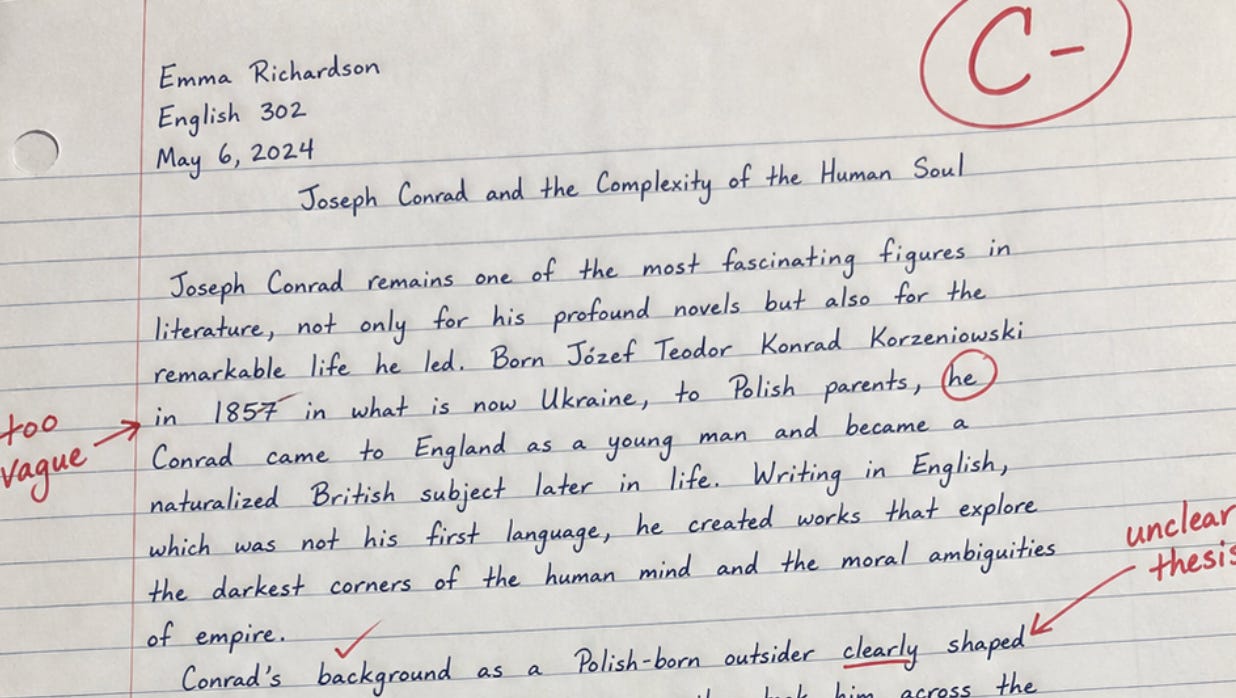
There’s a specific feeling, and you know it.
You get the paper back. Red ink in the margins. A grade lower than you hoped. And underneath the disappointment, a quieter, heavier thought slides in: maybe I’m just not smart. Maybe writing isn’t my thing. Maybe this says something about me.
It doesn’t. I want to share with you a different way to read that red ink, and it starts with a boring idea that happens to set you free.
Writing is a technology.
So is English.
Neither one is a test of your worth. They are tools. Complicated, powerful, sometimes badly built tools that humans invented and keep changing. And learning a tool follows a curve that has nothing to do with how smart or lovable or capable you are.
Think about every technology you now use without thinking. The first time you rode a bike, you wobbled and fell and were sure everyone was watching. The first time behind the wheel of a car, your hands were tight and the whole thing felt impossible. Typing felt like that once. So did tying your shoes. None of those wobbles were verdicts on your soul. They were just the curve. You climbed it, and now you don’t even remember the climb.
English is the same, except messier. Be honest with yourself about the tool you’re being graded on. English spelling is a patched-together disaster. Through, though, thought, tough, cough: five words that rhyme with almost nothing and almost each other. The rules contradict the rules. Half the “silent” letters are fossils from languages that died centuries ago. You did not fail a clean, fair test. You’re installing buggy software into a human brain, and a lot of you are installing it on top of another language that’s already running just fine.
So when the writing comes out clumsy, that’s not a readout of your intelligence. That’s a tool with a learning curve, working exactly the way learning curves work.
Now here’s the part that few tell you, and it’s the good part.
Tools get replaced.
The technology you’re sweating over right now is not permanent. Spelling will get easier. Drafting tools will get smarter. The way humans put thoughts into other humans’ heads keeps adjusting, and it will keep moving across your whole life. The struggle you feel today is sitting on top of a tool that someone, someday, is going to redesign.
And here’s the wild thing: the person who builds the better tool is usually someone who hated the old one. They struggled with it. They felt exactly where it was broken, in their hands, in their gut. That feeling is not weakness. That feeling is product research.
You are learning, right now, precisely where writing-in-English breaks. That makes you one of the few people who could fix it. You could vibe-code a writing tool tomorrow that helps the next kid who gets that paper back with the red ink. You might turn out to be the Shakespeare of a technology nobody has invented yet, fluent in a tool that doesn’t exist while you’re stumbling through one that does.
So let go of the lie hiding in the phrase “good writer,” like it’s a fixed thing you either are or aren’t, stamped on you at birth. There is no such stamp. There’s a curve, and you’re on it, and where you stand on the curve today says nothing about where you’ll stand next year.
Read that red ink again. It is not a sentence handed down about who you are. It’s a patch note. Here’s what to fix in the next version. That’s all it ever was.
Other people’s opinions about your writing do not get to decide what you’re worth. Pop music is full of anthems built on exactly that idea, that nobody else’s words get to set your value. Go play one. Loud.
But I’ll be honest with you, because you deserve honesty.
Sometimes words land harder than a grade. Sometimes they’re said early, by people who were supposed to keep us safe, and they don’t bounce off. They stick. They leave a mark you carry for years, replaying in a voice that sounds like your own but never really was.
That’s a different story, and it deserves its own letter.
Next: some words leave scars, and you can’t vibe-code those away. What actually helps, and who you actually need.